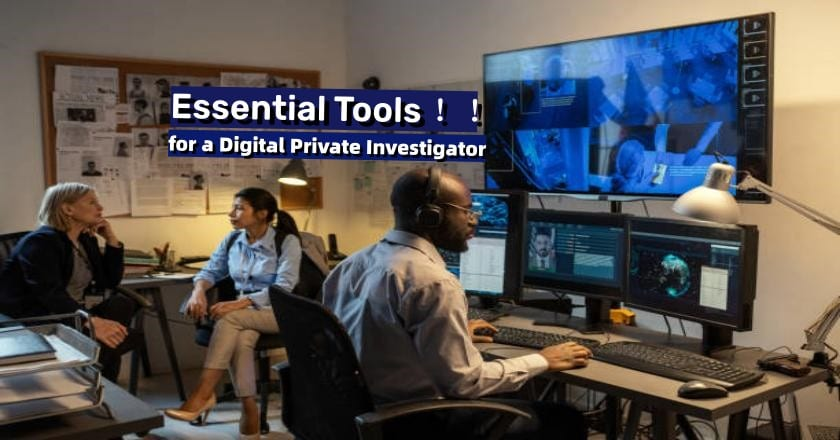
In today’s fast-paced world, the demand for truth, clarity, and accurate information has grown stronger than ever. Many individuals and businesses face situations where they require professional help to uncover hidden facts, confirm suspicions, or gather evidence discreetly. This is where the expertise of a private detective becomes invaluable 監聽器. Among the many tools available to these professionals, the monitoring device stands out as one of the most essential. The phrase Monitoring device Private Detective reflects the close relationship between technology and investigative work, demonstrating how modern tools can enhance traditional sleuthing skills.
The Role of a Private Detective
A private detective, often known as a private investigator, is trained to collect information legally and discreetly. They may be hired for a wide range of cases, from marital investigations and background checks to corporate fraud detection and missing person searches. Unlike police officers, who work under the authority of the state, private detectives operate on behalf of private clients. Their ultimate goal is to provide accurate, unbiased findings that can help clients make informed decisions or present evidence in legal proceedings.
To achieve this, private detectives must be resourceful. Observation, research, interviews, and surveillance all form a part of their work. But in the digital era, the efficiency of their investigations is greatly enhanced with advanced monitoring devices.
What is a Monitoring Device
A monitoring device is any piece of equipment used to observe, track, or record activities without drawing attention. These devices can range from simple audio recorders to sophisticated GPS trackers and hidden cameras. In the hands of a skilled private detective, a monitoring device can uncover the truth in ways that would otherwise be impossible.
These tools are not used recklessly; professional investigators know the legal boundaries that govern surveillance. Ethical and lawful use is crucial because evidence collected improperly could be dismissed in court or even lead to legal consequences for the detective and client.
Types of Monitoring Devices Used by Private Detectives
Private detectives utilize a variety of monitoring devices depending on the case. Some of the most common include:
Hidden Cameras
Hidden cameras are a staple in private investigations. They can be placed discreetly in offices, vehicles, or personal spaces to capture visual evidence of suspicious activities. Modern cameras are so small that they can be disguised in everyday objects like clocks, pens, or smoke detectors.
GPS Trackers
When tracking the movement of a vehicle is necessary, GPS monitoring devices come into play. They provide real-time location data, helping detectives verify suspicions of infidelity, monitor employee misuse of company cars, or trace the route of missing assets.
Audio Recording Devices
Although the use of audio surveillance is tightly regulated by law, in certain circumstances, detectives may employ recording devices to capture conversations. This can be especially valuable in fraud cases or business disputes where verbal commitments need to be verified.
Computer and Mobile Monitoring Tools
In today’s digital age, much of the suspicious activity occurs online or through smartphones. Private detectives use specialized monitoring software to trace emails, messages, and online interactions. While highly effective, this method requires strict adherence to legal standards regarding digital privacy.
Why Monitoring Devices Are crucial in Investigations
The effectiveness of a private detective often depends on the quality of evidence collected. Monitoring devices provide:
- Accuracy: Unlike human observation, which can be limited, a monitoring device records precise data.
- Discretion: These tools operate silently and without drawing attention, allowing for extended observation.
- Efficiency: With technology, detectives can monitor multiple subjects at once or review stored data later for insights.
- Credibility: Properly gathered digital evidence often holds significant weight in both personal and legal disputes.
Legal and Ethical Boundaries
The use of monitoring devices by private detectives is not without limitations. Privacy laws vary by jurisdiction, and ethical responsibility plays a vital role in how detectives operate. For example, planting a device in a private home without consent is illegal in most regions. Similarly, wiretapping a phone conversation without proper authorization is prohibited.
Professional detectives ensure that their use of monitoring devices is justified, proportionate, and within the bounds of the law. This balance between effectiveness and ethics is what separates a trustworthy investigator from an amateur.
Common Cases Where Monitoring Devices Are used
The Monitoring device Private Detective connection is most visible in specific types of investigations. Some of these include:
- Marital and Relationship Issues: Suspicions of infidelity often lead clients to hire detectives, who may use GPS trackers or hidden cameras to verify activities.
- Corporate Investigations: Companies dealing with internal fraud, data theft, or employee misconduct rely on monitoring devices to gather solid evidence.
- Missing Persons: Tracking devices and digital monitoring help trace movements and online activities that may lead to locating missing individuals.
- Insurance Fraud: Detectives use cameras and GPS devices to prove or disprove fraudulent claims, such as staged accidents or false disability reports.
Advantages for Clients
Hiring a private detective who effectively uses monitoring devices gives clients peace of mind. Instead of acting on suspicion, they receive verified information. Whether it’s an employer wanting to protect company assets or a spouse seeking clarity in a relationship, the results provided by monitoring devices often deliver closure.
Another key benefit is the professional handling of sensitive information. Clients can trust that evidence is collected legally, stored securely, and presented clearly. This makes the information more reliable, especially if it is later used in court.
The future of Monitoring Devices in Private Investigation
As technology continues to advance, the tools available to private detectives are becoming more sophisticated. Artificial intelligence, advanced facial recognition, and biometric monitoring are already making their way into the field. Drones with high-definition cameras offer new surveillance capabilities, while cybersecurity tools are improving digital monitoring.
However, with these advancements comes greater responsibility. Legislators and privacy advocates are closely watching the balance between technology and individual rights. Private detectives will need to adapt, ensuring that their use of monitoring devices aligns with evolving laws and ethical expectations.
Conclusion
The relationship between a monitoring device and a private detective is a powerful example of how technology enhances human expertise. A private detective brings intuition, experience, and discretion, while monitoring devices provide accuracy, efficiency, and undeniable proof. Together, they create a strong foundation for uncovering truth in complex cases.
For clients seeking clarity in personal or professional matters, understanding the role of Monitoring device Private Detective is crucial. It ensures they can choose an investigator who leverages the right tools while respecting legal and ethical boundaries. In an era where truth is often hidden beneath layers of deception, the combination of skilled detectives and advanced monitoring devices offers a path to clarity and resolution.